Thursday, April 16, 2026


Friday, June 13, 2025
Conversion, Culture and Cognitive Categories by Paul Hiebert (bounded and centered sets)
- Conversion, Culture and Cognitive Categories
- Hiebert, Paul G. 1978.
- ‘Conversion, Culture and Cognitive Categories’. Gospel in Context 1 (4):24-29.
How much must Papayya ‘know’ about the Gospel to be converted? by Paul G. Hiebert
Can an illiterate peasant become a Christian after hearing the Gospel only once? And, if so, what do we mean by conversion?
Imagine, for a moment, Papayya, an Indian peasant, returning to his village after a hard day's work in the fields. His wife is still preparing the evening meal, so, to pass the time, he wanders over to the village square. There he notices a stranger surrounded by a few curiosity seekers. Tired and hungry, he sits down to hear what the man is saying. For an hour he listens to a message of a new God, and something which he hears moves him deeply. Later he asks the stranger about the New Way, and then, almost as if by impulse, he bows his head and prays to this God who is said to have appeared to humans in the form of Jesus. He doesn't quite understand it all. As a Hindu he worships Vishnu who incarnated himself as a human or animal in order to rescue humankind at different times in history. He also knows many of the other 33 million gods village proverbs say exist. But the stranger said there is only one God, and this God has appeared among humans only once. Moreover, this Jesus is said to be the Son of God, but the Christian did not say anything about God's wife. It is all confusing to him.
The man turns to go home, and a new set of questions floods his mind. Can he still go to the temple in order to pray? Should he tell his family about his new faith? And how can he learn more about Jesus—he cannot read the few papers the stranger gave him, and there are no other Christians within a day's walk. Who knows when the stranger will come again?
Conversion and cultural differences
Can Papayya become a Christian after hearing the Gospel only once? To this we can only say yes. To say that a person must be educated, have an extensive knowledge of the Bible, or live a near perfect life would mean that the Good News is only for an elite few in the world.
But what essential change has taken place when Papayya responds to the Gospel message? Certainly he has acquired some new information. He has heard of Christ and his redemptive work on the cross. He may also have heard a story or two about Christ's life on earth. But his knowledge is minimal. Papayya could not pass even the simplest tests of Bible knowledge or theology.
To complicate matters further, the knowledge Papayya has, he understands in radically different ways from Christians in the West or in other parts of the world. For example, the English speaker talks of God, but Papayya speaks of devudu because he is a Telugu speaker. But devudu does not have precisely the same meaning as God, just as the English word "God" does not correspond exactly to the Greek word theos found in the New Testament.
Ordinary English speakers divide living beings into several different categories. One of these is supernatural beings, a category into which they put God, angels, Satan, and demons. Another is human beings and includes men, women, and children. A third is animals, and a fourth is plants. In addition to these there is the category of inanimate objects such as sand and rocks, as well as a few kinds of life that are not so easily classified and over which there is some disagreement, such as virus and germs. In this system of classification, God is categorically different from human beings, and human beings from animals and plants.1 The incarnation means that God crossed the categorical difference between himself and humans and became a human.
Telugu speakers do not differentiate between different kinds of life. All forms of life are thought to be manifestations of a single life: gods, demons, humans, animals, plants, and even what appear to be inanimate objects all have the same kind of life (see Figure 1). To be sure, the gods have more of this life than humans, and humans more than animals or plants. But there is no real difference between gods and humans or humans and animals. After death, good humans may be reborn as gods, and wicked gods as animals. Moreover, gods come down constantly to earth as incarnations to help humankind, just as a man might stoop to help his servant. The problem we face, then, is that when we translate the Word of God into Telugu, not only is there a change in sounds from God to devudu, but a change in basic meanings. There is a fundamental difference in the ways in which the two words are viewed, and in the ways these words are related to other words belonging to the same cognitive domain. If devudu does not carry the biblical connotation of the word "God," then certainly we must find another word for translating it. There are many that suggest themselves: ishvarudu, bhagavan, parameshvara, and so on. But upon examination, we find that all of these carry the same essential meaning as devudu. There is, in fact, no word in Telugu that carries the same connotations as either the English word "God" or the Greek word theos (nor do the two have exactly the same meaning). Nor is "God" the only word with which we have a problem in translation. Similar differences exist between any other major words of any two languages. Now we must ask not only what knowledge must Papayya have to become a Christian, but also whether this knowledge must be perceived in a particular way—from a particular worldview. Must Papayya learn the English or the Greek meaning for "god" before he becomes a Christian? Since it is so hard to measure a person's beliefs and concepts, would it not be better to test his conversion by means of changes in his life? Can we not define a Christian as a person who goes to church on Sunday, and who does not drink liquor or smoke? Here, too, the change at conversion may not be dramatic. There is no church for Papayya to attend. The circuit preacher may call only a half dozen times a year. Papayya cannot read the Scriptures. His theology is found in the few Christian songs he has learned to sing. To be sure, he no longer worships at the Hindu temple, but otherwise his life is much the same. He carries on his caste occupation and lives as most other villagers do. Is he then not a Christian?
Conversion and category differences
What does it mean to be a Christian? Before we can answer this question we must look more closely at our own thought patterns—at what we mean by the word "Christian." This word, like many other words, refers to a set of people or things that we think are alike in some manner or other. It refers to a category that exists in our minds. To be sure, God, looking at the hearts of people, knows who are his. It is he who one day will divide between the saved and the lost. But here on earth, we as humans pass judgments, we decide for ourselves who is a Christian, and, therefore, what it means to be a Christian. What criteria do we commonly use? Before we answer this question, we must ask an even more fundamental question: what kind of category are we going to use? Modern studies of human thought (see bibliography) show us that our mind forms categories in at least three different ways, and each of the three kinds of 1This is true despite the widespread acceptance of the theory of biological evolution. This theory blurs the distinctions between humans, animals, and plants. But in everyday life the distinction is strong. We can kill and eat animals and plants, but to kill humans or to enslave them is considered a crime. Animals need not wear clothes, but humans must. categories has its own structural characteristics. For our discussion here we will look at two of these types: (1) bounded sets and (2) centered sets
1. Bounded sets
Many of our words refer to bounded sets: "apples," "oranges," "pencils," and "pens," for instance. In fact, the English language, probably borrowing from the Greek, uses bounded sets for most of its nouns—the basic building blocks of the language.
What is a bounded set? How does our mind form it? In creating a bounded set our mind puts together things that share some common characteristics "Apples," for example, are objects that are "the firm fleshy somewhat round fruit of a Rosaceous tree. They are usually red, yellow or green and are eaten raw or cooked."3
Bounded sets have certain structural characteristics—that is, they force us to look at things in a certain way. Let us use the category "apples" to illustrate some of these: a.
a)The category is created by listing the essential characteristics that an object must have to be within the set. For example, an apple is (1) a kind of "fruit" that is (2) firm, (3) fleshy, (4) somewhat round, and so on. Any fruit that meets these requirements (assuming we have an adequate definition) is an "apple." b.
b)The category is defined by a clear boundary. A fruit is either an apple or it is not. It cannot be 70% apple and 30% pear. Most of the effort in defining the category is spent on defining and maintaining the boundary. In other words, not only must we say what an "apple" is, we must also clearly differentiate it from "oranges," "pears," and other similar objects that are not "apples."
c. Objects within a bounded set are uniform in their essential characteristics. All apples are 100% apple. One is not more apple than another. Either a fruit is an apple or it is not. There may be different sizes, shapes, and varieties, but they are all the same in that they are all apples. There is no variation implicit within the structuring of the category.
d. Bounded sets are static sets. If a fruit is an apple, it remains an apple whether it is green, ripe, or rotten. The only change occurs when an apple ceases to be an apple (e.g., being eaten), or when something like an orange is turned into an apple (something we cannot do). The big question, therefore, is whether an object is inside or outside the category. Once it is within, there can be no change in its categorical status.
2. "Christian" as a bounded set:
What happens to our concept of "Christian" if we define it in terms of a bounded set? If we use the above characteristics of a bounded set we come up with the following:
a. We would define "Christian" in terms of a set of essential or definitive characteristics. Because we cannot see into the hearts of people, we generally choose characteristics that we can see or hear, namely tests of orthodoxy (right beliefs) or orthopraxy (right practice) or both.
For example, some define a Christian as a person who believes (gives verbal acknowledgement to) a specific set of doctrines such as the deity of Christ, the virgin birth, and so on. Some make such lists quite long and add on specific doctrines of eschatology or soteriology. Others, convinced that true "belief" is more than a mental argument with a set of statements, look for the evidence of belief in changed lives and behavior. A Christian, then, is one who does not smoke or drink alcohol, and so on.
b. We would make a clear distinction between a "Christian" and a "non-Christian." There is no place in between. Moreover, maintaining this boundary is critical to the maintenance of the category. Therefore it is essential that we determine who is a Christian and who is not, and to 2

In addition to these two, there is a third and possibly a fourth type of category, namely fuzzy sets of one or two types. To be precise these should be referred to as fuzzy subsets. 3 A composite definition based on the Oxford and the Thorndyke dictionaries. keep the two sharply differentiated. We want to make sure to include those who are truly Christian and to exclude as heretics those who claim to be but are not. To have an unclear boundary is to undermine the very concept of "Christian" itself.
c. We would view all "Christians" as essentially the same. There are old experienced Christians and young converts, but all are Christian.
d. We would stress evangelism as the major task—getting people into the category. Moreover, we would see conversion as a single dramatic event—crossing the boundary between being a "nonChristian" and being a "Christian." To do so a person must acquire the defining characteristics which we have outlined above. Crossing the boundary is a decision event. Once a person is a Christian he is 100% Christian. There is essentially (not required by the structure of the category) nothing more for him to acquire. He might grow spiritually, but this is not an essential part of what it means to be a Christian. Let us return, for a moment, to Papayya. If we think of "Christian" as a bounded set, we must decide what are the definitive characteristics that set a Christian apart from a non-Christian. We may do so in terms of belief in certain essential doctrines. But here we face a dilemma. If we reduce these to so simple a set that we can say Papayya has truly become a Christian (that he has acquired all of the beliefs necessary to become a Christian) are we not in danger of settling for cheap grace? Furthermore, how do we handle the fact that Papayya views the doctrines we do require in different thought forms? Must these be corrected before we are convinced that he is a real Christian? On the other hand, if we raise the basic requirements for being a Christian too high, we make it impossible for Papayya to become a Christian that night, or that year—for it would take more than a year of careful teaching before he could begin to understand our theological framework. We face a similar problem in using changes in behavior to define a Christian. There will be changes in Papayya, to be sure, but many of them will not take place immediately. We may see little in the way of a dramatic change by tomorrow. Is he then not a Christian?
3. Centered sets: Could it be that our problem with deciding whether Papayya is or is not a Christian has to do with the way we form our mental category "Christian"?
But there are other ways to form categories. A second way is to form centered sets. A centered set has the following characteristics:
a. It is created by defining a center, and the relationship of things to that center. Some things may be far from the center, but they are moving towards the center, therefore, they are part of the centered set. On the other hand, some objects may be near the center but are moving away from it, so they are not a part of the set. The set is made up of all objects moving towards the center.
b. While the centered set does not place the primary focus on the boundary, there is a clear division between things moving in and those moving out. An object either belongs to a set or it does not. The set focuses upon the center and the boundary emerges when the center and the movement of the objects has been defined. There is no great need to maintain the boundary in order to maintain the set. The boundary is so long as the center is clear.
c. Centered sets reflect variation within a category. While there is a clear distinction between things moving in and those moving out,4 the objects within the set are not categorically uniform. Some may be near the center and others far from it, even though all are moving towards the center. Each object must be considered individually. It is not reduced to a single common uniformity within the category.
4 Between A and not A. This is the law of the excluded middle. While it is part of bounded and centered sets, the law does not hold for fuzzy sets. d. Centered sets are dynamic sets. Two types of movements are essential parts of their structure. First, it is possible to change direction—to turn from moving away to moving towards the center, from being outside to being inside the set. Second, because all objects are seen in constant motion, they are moving, fast or slowly, towards or away from the center. Something is always happening to an object. It is never static. Illustrations of centered sets are harder to come by in English, for English sees the world largely in terms of bounded sets. One example is a magnetic field in which particles are in motion. Electrons are those particles which are drawn towards the positive magnetic pole, and protons are those attracted by the negative pole.5
4. "Christian" as a centered set: How would the concept "Christian" look if we were to define it as a centered set?
a. A Christian would be defined in terms of a center—in terms of who is God. The critical question is, to whom does the person offer his worship and allegiance? This would be judged, in part, by the direction a person faces and moves. A Christian has Christ as his God. Christ is his center if he moves toward Christ—if he seeks to know and follow after Christ. From the nature of the centered set, it should be clear that it is possible that there are those near the center who know a great deal about Christ, theology, and the church, but who are moving away from the center. These are the Pharisees. On the other hand there are those who are at a distance—who know little about Christ—but they may be Christians for they have made Christ their Lord. He is the center around which their life revolves. b. There is a clear division between being a Christian and not being a Christian. The boundary is there. But there is less stress on maintaining the boundary in order to preserve the existence and purity of the category, the body of believers. There is less need to play boundary games and to institutionally exclude those who are not truly Christian. Rather, the focus is on the center and of pointing people to that center. c. There is a recognition of variation among Christians. Some are closer to Christ in their knowledge and maturity, others have only a little knowledge and need to grow. But all are Christian, and all are called to move even closer to Christ.
By recognizing variance, the centered set avoids the dilemma of offering cheap grace to make it possible for the ignorant and the gross sinners to become Christians without lengthy periods of training and testing. Growth after conversion is an intrinsic part of what it means to be a Christian. A Christian is not a finished product the moment he is converted.
Two important dynamics are recognized. First there is conversion, which in a centered set means that the person has turned around. He has left another center or god and has made Christ his center. This is a definite event—a change in the God in whom he places his faith.
But, by definition, growth is an equally essential part of being a Christian. Having turned around, one must continue to move towards the center. There is no static state. Conversion is not the end, it is the beginning. We need evangelism to bring people to Christ, but we must also think about the rest of their lives. We must think in terms of bringing them to Christian maturity in terms of their knowledge of Christ and their growth in Christlikeness. We must also think of the body of believers in terms of their growth over the centuries. 5The turning may take several steps, but there is a definite turning around which is distinct from growth. Note, too, that the stress is on a change in knowledge or action. Knowledge must be acquired, but that in itself is not enough. It is a decision, a change in faith, that is the critical factor. Stress on growth also means that every decision a Christian makes, not only his decision to become a Christian, must take Christ into account. Every decision throughout life moves him towards Christ or slows him down.6 If we were to define "Christian" as a centered set, the critical question regarding Papayya is not what he knows (although he obviously needs some knowledge) but has he made Christ his God— does he seek to follow Christ and to know him more fully? Conclusions What do we mean when we say that Papayya, an illiterate peasant, has become a Christian? In answering this, it is clear that we must first clarify what we mean by the word—whether we are thinking in terms of bounded or centered sets. If we do not make this clear, we will only talk past each other, and our disagreements will often arise out of subconscious presuppositions rather than out of theological differences.
A centered set approach to defining "Christian" corresponds more closely to what we see happening in mission and church growth. It also seems to correspond more closely with the Hebraic view of reality.
But a centered set approach does raise some problems, at least for westerners who think primarily in terms of bounded sets. These problems often relate to the question, how do you organize an institution such as the church as a centered set? Is it not essential to maintain the boundaries by setting high standards for membership? On the other hand, the bounded set fits best with our western view of the world and our democratic ways of organizing associations such as the church.7 Ultimately the question of whether we should see the term "Christian" as a bounded or as a centered set must be decided on theological, not pragmatic principles. But this demands that we think through all of the basic theological terms and decide which of these should be viewed as bounded sets, and which as centered sets.
Bibliography Black, Max, 1963. "Reasoning with Loose Concepts," Dialogue, 2, 1-12. Cohen, P.J., & Hersh, R., 1967. "Non-Cantorian Set Theory," Scientific American, 217:15,104106. Cohen, P.J., 1966. Set Theory and the Continuum Hypothesis. Hashisaki, J., & Stoli, R.R., 1975. "Set Theory," The New Encyclopaedia Britannica. 15th Edition. Macropedia 16:569-575. Hatcher, W.S., 1968. Foundations of Mathematics. Zadeh, L.A., 1965. "Fuzzy Sets," Information and Control, 8, 338-353.
6 In centered set terms, one might say that each decision moves a person towards or away from Christ, but that a person remains a Christian so long as he is faced towards Christ. Whether he can or cannot turn back to face away, and therefore lose his position as a Christian, is a theological issue and is not determined by the structure of the category itself.
7 It is interesting to note that the independent church movements in India, such as Bhakt Singh, organize themselves in terms of centered sets. They have only loosely defined, or no church membership, and give leadership to a few elders at the center.
Monday, November 04, 2024
Peru: unbounded mystery and exorcism


“..no country in this hemisphere outrivals Peru in the aura of mystery and exorcism.. Peru locks into the world traffic of people and ideas, where, as anthropologist Arjun Appadrai puts it, ‘groups are no longer tightly territorialized, spatially bounded, historically self-conscious or culturally homogenous."
Thursday, December 01, 2016
perichoretic and polycentric church structure

"What are the practical implications of the Trinity for church structure?"
After the first few responders offer blank stares, maybe one will catch something profound (like these folks), and as the Q man (Quentin P. Kinnison) does below in a highly-recommended book.
From a section headed Trinitarian Implications for Church Structures:
...From Trinitarian themes, an ecclesiology forms which expresses serious concern regarding the specialization of ministry. Any specialized ministry in the church occurs within the ministry of all members--the universal priesthood of all believers.
...Viewing the relations of the Trinity as complementary perichoretic subjects, Volf concludes that ecclesial structures must be viewed as complementary and egalitarian. Therefore, he forcefully states:
If one starts from the Trinitarian model I have suggested, then the structure of ecclesial unity cannot be conceived by way of the one, be it the pope, the patriarch or the bishop. Every ecclesial unity held together by a mon-archy, by a "one-[man!]-rule, is monistic and thus also un-trinitarian.In such a church, the Charismata are recognized as universally distributed and are practiced by all in a "polycentric community" where members are participative, fulfilling their calling to serve God and the community in God's mission.
-Quentin P. Kinnison, Transforming Pastoral Leadership: Reimagaining Congregational Leadership for Changing Contexts, pp. 83-84
For more on what polycentrism might mean, see pp. 96-99 of the book.
Yes, buy it now!
--
PS:
I am intrigued by how best to draw/chart out polycentric.
Here are some starting points from Google Images.
Or maybe this could be attempted through set theory. See:
Tuesday, December 01, 2015

Saturday, July 11, 2015
Which Dave Matthews?: "as horny as Lil Wayne" and/or as Godhaunted and apocalyptic as anybody?

Man, could he pray through his guitar (with "palpale holiness")..even if he didn't believe in God.
More recently, RS has suggested that Dave Matthews is
one of rock's most underrated Pretty Complex Dudes – as horny as Lil Wayne, as troubled as Thom Yorke, able to growl "war is the most vulgar madness" like the American Sting he's always sort of been. He's got a beige-Baja-shirt rep and a black-turtleneck soul. -linkGreat point, since as Mr and Mrs David Dark have masterfully noted Yorke (and his Radiohead) are absolutely apoclayptic and "very resurrection." (Back to Zappa, Rolling Stone, in the link above, Joe’s Garage is Zappa’s Apocalypse Now.)
We apparently have the word “apocalypse“ all wrong. In its root meaning, it’s not about destruction or fortune telling; It’s about revealing; It’s what James Joyce calls an epiphany-the moment you realize your so-called love for the young lady, all your professions, all your dreams, and all your efforts to get her to notice you were the exercise of an unkind and obssesive vanity…The real world, within which you’ve lived and moved and had your being, has unveiled itself. It’s starting to come to you. You aren’t who you made yourself out to be. An apocalypsehas occurred, or a revelation, if you prefer…Apocalyptic maximizes the reality of human suffering and folly before daring a word of hope. The hope has nowhere else to happen but the valley of the shadow of death. Is it any surprise that we often won’t know it when we see it?
-David Dark, “Everyday Apocalypse: The Sacred Revealed in Radiohead, The Simpsons and Other Pop Culture Icons”, p.10
One heteroclite has suggested/joked that half of Dave's songs are about God, and half are about sex...
....and maybe even the sexsongs are eventually Godsongs (or is it vice versa?)
Makes sense; as Rob Bell says in "Sex. God.,' "This is about that"
How do you hear/read/experience/interpret Dave Matthews?
Some deep meditations/prayers/laments about and to God (or "God as a symbol"):
- Dave Matthews on God....and monkeys
- Dave Matthews: "when i get home/i wanna believe in Jesus"
- Godhaunted Dave Matthews: Bartender and The Maker
Friday, June 26, 2015
the strange loop/truce/helix of Myers-Briggs: I am my opposite, of course
--which I realized makes sense, as I am off the charts "intuitively feeling" (NF) on Myers-Briggs.
That means I can trust my NF...
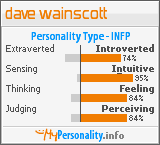
 I have often suggested that if each pair of preferences is a pictured as a spectrum,
imagine folks who are strong on one "end" looping around to act like their "opposite."
True also of fundamentalisms of the left and right..
Is that "surrational," Mark DeRaud?
Is that loopy?
 You know, I sometimes picture the "line" as more of a mult-loopy helix (Hegelian?) helix..like this diagram of sex(uality) from the cover of Foucault's :"The History of Sexuality">>
I don't see anywhere in the book where this diagram is explicitly explained, but if Rob Bell is right..
For many, sexuality is simply what happens between two people involving physical pleasure. But that's only a small percentage of what sexuality is. Our sexuality is all the ways we strive to reconnect with our world, with each other, and with God." (Rob Bell, "Sex God," p. 42).
...it's inevitably also a picture of life. let alone our personality preferences.
In Myers-Briggs, it seems that when one person is E or I, not matter how far in one direction, their "vertedness" loops and weaves.

Or check out like Kegan's developmental chart, "a helix of evolutionary truces"
I can't help it. I just intuitively feel that life itself is a
holy helix.
Anyway..the article, with an example:
------------------------------------------------------------
"How Each Myers-Briggs Type Contradicts Their Own Stereotype" by Heidi Priebe.
Full article here
Excerpt about my type:
..because it's all about me! (:
INFP
Thursday, May 21, 2015
"the preacher didn't convince me, but Johnny Cash tried"
 This loaded "devotional" gem is tucked into a "secular" book..
Sarah Vowell's journal entry for January 5 in "Radio On: A Listener's Diary"
...Yesterday, Portland made me nervous, and the radio didn't help...
I tuned in an AM sermon hosted by a singsongy preacher with an ironic bent.
"Why, if man is basically good..." he begins the next thirty-three sentences:
"Why, if man is basically good..." did a man in the choir get mugged last night, did a woman he knows get raped, did thieves break in and steal a family's belongings, did he hear on the news that two teenagers killed their parents, and so on. Man is basically evil, he cries, that's why. He didn't convince me, but Johnny Cash tried.
This morning before everyone else woke up, I went through
my friend Chris's records and played a really rise-and-shine, high-voltage album by sunshine chanteuse Nico before I switched to the Man in Black's last effort, American Recordings. A dreary little ballad, by Mr. Pure Pop for Now People, Nick Lowe,
called “The Beast in Me” stopped me cold.
Its slow; though it's not the tempo but rather Cash's bleak and painful voice that forced me to face my own ugliness. "God help the beast in me," he moans.
That Portland preacher bought a ticket on the wrong guilt trip, relying on examples of commandments broken, of killing and headline crime. By drilling his congregation with dramatic case histories, he neglects the smaller, infinitely more suitable acts against goodness and decency. Most likely, his average listener had never mugged another pedestrian, shot her husband, or robbed from the poor, but what if, like the beast in me, she had just abandoned her best friend in a time of crisis to ward off her own paranoia by getting drunk alone? -link, p. 11-12
Related Johnny Cash posts:
holy heteroclite:: Johnny Cash officiating communion for ...
holy heteroclite:: Johnny Cash: Amazing Grace and Pagan.. "st ...
holy heteroclite:: "He preaches WITH, not TO the damned ...
holy heteroclite:: COFFEE, NOT JESUS
holy heteroclite:: psalms with street cred and drums that ...
Tuesday, May 05, 2015
"You Have to Pay for Public Life"

Musical roads ?

Here (page 111-141) in a PDF of a book of selected essays of Charles W Moore, is Moore's seminal, prescient 1965 essay "You Have to Pay for Public Life"(from Perspecta, the architectural journal of Yale)..
If that goes offline, the complete essay, minus a few sentences, is here :pp 93-103.
Also: 112-141 here some pages missing, including the first (part of which is here).
--
Excerpt:
This issue of Perspecta considers monumental architecture as part of the urban scene. I was asked to ferret out some on the West Coast, especially in California. Perspecta’s editors suspected, I presume, that I would discover that in California there is no contemporary monumental architecture, or that there is no urban scene (except in a sector of San Francisco), or more probably, that both monumental architecture and the urban scene are missing. Their suspicions were well founded; any discussion from California in 1964 about monumental urban architecture (as it is coming to exist, for instance, in New Haven) is bound to be less about what we have than about what we have instead.
Any discussion of monumental architecture in its urban setting should proceed from a definition of (or, if you prefer, an airing of prejudice about) what constitutes “monumental,” and what “urban” means to us. The two adjectives are closely related: both of them involve the individual’s giving up something, space or money or prominence or concern, to the public realm. Monumentality, I take it, has to do with monuments. And a monument is an object whose function is to mark a place, either at that place’s boundary or at its heart. There are, of course, private monuments, over such places as the graves of the obscure, but to merit our attention here, and to be of any interest to most of the people who view it, a monument must mark a place of more than private importance or interest. The act of marking is then a public act, and the act of recognition an expectable public act among the members of the society which possesses the place. Monumentality, considered this way, is not a product of compositional techniques (such as symmetry about several axes), of flamboyance of form, or even of conspicuous consumption of space, time, or money. It is, rather, a function of the society’s taking possession of or agreeing upon extraordinarily important places on the earth’s surface, and of the society’s celebrating their pre-eminence.
A version of this agreement and this celebration was developed by Jose Ortega y Gasset, in The Revolt of the Masses, into a definition of urbanity itself. “The urbs or polis,” he says, “starts by being an empty space, the forum, the agora, and all the rest is just a means of fixing that empty space, of limiting its outlines. The square, thanks to the walls that enclose it, is a portion of the countryside which turns its back on the rest, eliminates the rest, and sets up in opposition to it.
Ortega y Gasset’s product is the city, the urban unit based upon the Mediterranean open square, a politically as well as physically comprehensible unit that people used to be willing to die for. The process of achieving an urban focus is the same as that of achieving monumentality: it starts with the selection, by some inhabitants, of a place which is to be of particular importance, and continues when they invest that place with attributes of importance, such as edges or some kind of marker. This process, the establishing of cities and the marking of important places, constitutes most of the physical part of establishing civilization. Charles Eames has made the point that the crux of this civilizing process is the giving up by individuals of something in order that the public realm may be enhanced. In the city, that is to say, urban and monumental places, indeed urbanity and monumentality themselves, can occur only when something is given over by people to the public.
Planners have a way of starting every speech by articulating their (private) discovery that the public body’s chief concern is people. The speech then says unrelatedly that it’s too bad the sprawling metropolis is so formless. It might well be that if the shibboleth about people were turned inside out, if planning efforts went toward enlarging people’s concerns—and sacrifices— for the public realm, that the urban scene would more closely approach the planners’ vision, and that the pleasures of the people would be better served.
The most evident thing about Los Angeles, especially, and the other new cities of the West is that in the terms of any of the traditions we have inherited, hardly anybody gives anything to the public realm. Instead, it is not at all clear what the public realm consists of, or even, for the time being, who needs it. What is clear is that civic amenities of the sort architects think of as “monumental,” which were highly regarded earlier in the century, are of much less concern today. A frivolous but pointed example is the small city of Atascadero, which lies in a particularly handsome coastal valley between Los Angeles and San Francisco. It was first developed in the ‘20s as a realestate venture with heavy cultural overtones and extensive architectural amplification. Extraordinarily ambitious “monumental” architecture popped up all over the townsite. Buildings of a vague Italian Romanesque persuasion with a classic revival touch, symmetrical about several axes, faced onto wide malls punctuated or terminated by Canovesque sculpture groups. The effect was undeniably grand, if a bit surreal, exploiting wide grassy vistas among the dense California oaks. But there wasn’t much of a town until the ‘40s. Then, on the major mall, an elaborately sunken panel of irrigated green, there cropped up a peninsula of fill surmounted by a gas station. Later, there came another, and more recently an elevated freeway has continued the destruction of the grand design. All this has happened during the very period in which Philadelphians, with staggering energy and expense, have been achieving in their Center City long malls north from Independence Hall and west from a point just off their City Hall, grand vistas at every scale, an architectural expression overwhelmingly serene, all urban desiderata which the Atascaderans did not especially want or need, and have been blithely liquidating. Doesn’t this liquidation constitute some sort of crime against the public? Before we start proceedings, we should consider what the public realm is, or rather, what it might be in California now and during the decades ahead, so that the “monumentality” and the “urbanity” that we seek may be appropriate as functions of our own society and not of some other one.
In California cities, as in new cities all over the country (and in California just about all cities are new cities), the pattern of buildings on the land is as standard as it is explosive. Everywhere near population centers, new little houses surrounded by incipient lawns appear. They could be said to be at the edge of the city, except that there is no real edge, thanks to the speed of growth, the leapfrogging of rural areas, and the long commercial fingers thatfollow the highways out farther than the houses have yet reached. Meanwhile, in areas not much older, houses are pulled down as soon as zoning regulations allow, to be replaced with apartments whose only amenity is a location handily near a garage in the basement.
The new houses are separate and private, it has been pointed out: islands, alongside which are moored the automobiles that take the inhabitants off to other places. It might be more useful and more accurate to note that the houses and the automobiles are very much alike, and that each is very like the mobile homes which share both their characteristics. All are fairly new, and their future is short; all are quite standard, but have allowed their buyers the agonies of choice, demonstrating enough differences so that they can readily be identified during the period of ownership, and so that the sense of privacy is complete, in the car as well as in the house. This is privacy with at least psychic mobility. The houses are not tied down to any place much more than the trailer homes are, or the automobiles. They are adrift in the suburban sea, not so mobile as the cars, but just as unattached. They are less islands alongside which the cars are moored than little yachts, dwarfed by the great chrome-trimmed dinghys that seek their lee.
This is, after all, a floating world in which a floating population can island-hop with impunity; one need almost never go ashore. There are the drive-in banks, the drive-in movies, the drive-in shoe repair. There is even, in Marin County, Frank Lloyd Wright’s drive-in Civic Center, a structure of major biographical and perhaps historical importance, about whose forms a great deal of surprisingly respectful comment has already appeared in the press. Here, for a county filling up with adjacent and increasingly indistinguishable suburban communities, quite without a major center, was going to be the center for civic activities, the public realm, one would have supposed, for which a number of public-spirited leaders in the community had fought long and hard. It might have been, to continue our figure, a sort of dock to which our floating populace might come, monumental in that it marked a special place which was somewhere and which, for its importance, was civic if not urban. But instead of a dock for floating suburbanites, it is just another ship, much larger than most, to be sure, and presently beached (wedged, in fact) between two hills. It demands little of the people who float by, and gives them little back. allows them to penetrate its interior from a point on its underside next to the delivery entrance, but further relations are discouraged, and lingering is most often the result of inability to find the exit.
A monster of equivalent rootlessness hoves into view from the freeway entrance to California's one established anchored city, San Francisco. The immense new Federal Building just being completed by John Carl Warnecke and a host of associated architects, stands aloof from the city's skyline, out of scale with it, unrelated to anything in the topography, no part even of the grandiose civic center nearby.
Slick details, giant fountains, and all, it draws back from the street and just stands there. It is one of the West's largest filing cabinets, and it is unfair, of course, to expect from it any attributes of the public realm for it, some distant bureaucrats would spitefully have removed it to Oakland. So much for the Federal Heart of the City.
...It is interesting, if not useful, to consider where one would go in Los Angeles to have an effective revolution of the Latin American sort: presumably, that place would be the heart of the city. If one took over some public square, some urban open space in Los Angeles, who would know? A march on City Hall would be equally inconclusive. The heart of the city would have to be sought elsewhere. The only hope would seem to be to take over the freeways, or to emplane for New York to organize sedition on Madison Avenue; word would quickly enough get back..
...More recent years have their monuments as well. Indeed, by almost any conceivable method of evaluation that does not exclude the public, Disneyland must be regarded as the most important single piece of construction in the West in the past several decades. The assumption inevitably made by people who have not yet been there—that it is some sort of physical extension of Mickey Mouse—is wildly inaccurate. Instead, singlehanded, it is engaged in replacing many of those elements of the public realm which have vanished in the featureless private floating world of southern California, whose only edge is the ocean, and whose center is otherwise undiscoverable (unless by our revolution test it turns out to be on Manhattan Island). Curiously, for a public place, Disneyland is not free. You buy tickets at the gate. But then, Versailles cost someone a great deal of money, too. Now, as then, you have to pay for the public life.
Disneyland, it appears, is enormously important and successful just because it recreates all the chances to respond to a public environment, which Los Angeles particularly does not any longer have. It allows play-acting, both to be watched and to be participated in, in a public sphere. In as unlikely a place as could be conceived, just off the Santa Ana Freeway, a little over an hour from the Los Angeles City Hall, in an unchartable sea of suburbia, Disney has created a place, indeed a whole public world, full of sequential occurrences, of big and little drama, of hierarchies of importance and excitement, with opportunities to respond at the speed of rocketing bobsleds (or rocketing rockets, for all that) or of horse-drawn street cars. An American Main Street of about 1910 is the principal theme, against which play fairy-tale fantasies, frontier adventure situations, jungles, and the world of tomorrow. And all this diversity, with unerring sensitivity, is keyed to the kind of participation without embarrassment which apparently at this point in our history we crave. (This is not the point, nor am I the appropriate critic, to analyze our society’s notions of entertainment, but certainly a civilization whose clearest recent image of feminine desirability involves scantily dressed and extravagantly formed young ladies—occasionally with fur ears—who disport themselves with wildest abandon in gaudily make-believe bordellos, while they perforce maintain the deportment of vestal virgins—certainly a civilization which seeks this sort of image is in need of pretty special entertainment.) No raw edges spoil the picture at Disneyland; everything is as immaculate as in the musical comedy villages that Hollywood has provided for our viewing pleasure for the last three generations. Nice-looking, handsomely costumed young people sweep away the gum wrappers almost before they fall to the spotless pavement. Everything works, the way it doesn’t seem to any more in the world outside. As I write this, Berkeley, which was the proud recipient not long ago of a set of fountains in the middle of its main street, where interurbans once had run and cars since had parked, has announced that the fountains are soon being turned off for good, since the chief public use developed for them so far as been to put detergent in them, and the city cannot afford constantly to clean the pipes. Life is not like that in Disneyland; it is much more real: fountains play, waterfalls splash, tiny bulbs light the trees at night, and everything is clean....
Of course Disneyland, in spite of the skill and variety of its enchantments, does not offer the full range of public experience. The political experience, for instance, is not manifested here, and the place would not pass our revolution test. Yet there is a variety of forms and activities great enough to ensure an excellent chance that the individual visitor will find something to identify with. A strong contrast is the poverty or absurdity of single images offered up by architects, presumably as part of an elaborate (and expensive) ingroup professional joke. The brown-derby-shaped Brown Derbies of an earlier generation, which at least were recognizable by the general public, have given way to such phenomena as the new Coachella Valley Savings and Loan in Palm Springs which rises out of vacant lots to repeat Niemeyer’s Palace of the Dawn, in Brasilia. Across the street from this, a similar institution pays similar in-group tribute to Ronchamp. The most conspicuous entry in this category of searches after monumentality, though, is architect Edward Durrell Stone’s revisitation of Mussolini’s Third Rome in Beverly Hills. This one has plants growing out of each aerial arch. Apparently there was a plethora of these arches, for they crop up again along Wilshire Boulevard, as far away as Westwood Village without, however, contributing much continuity to that thoroughfare...
...A chain of Disneylands would have a disquieting effect not unlike that of the new transcontinental chains of identical motels that weigh the tired traveler with the hopelessness of driving all day to arrive at a place just like the one he started from. One can hope, too, for the day when the gradual loss of differentiated place, the gradual merging of the gray no-places and the inundation of the places of special significance, will cause the slumbering citizenry to awaken, to demand to spend its money to have a public life. But it seems unwise to wait for that.
Right now the largest single patron available to be pressed into the service of the public realm is the State Highway Department. Freeways until now have been one of the most serious generalizers of place in the state, ruthlessly and thoughtlessly severing some communities, congesting others, and obliterating still others, marring, gouging, and wiping out whole landscapes. Yet, for all that, they loom large in the public eye as one of the biggest, strongest, most exciting, and most characteristic elements of the new California. If one had to name the center of southern California, it would surely be the place not far from the Los Angeles City Hall where the area’s major freeways wrap together in a graceful, strong, and much photographed three-level interchange (in the photographs, the tower of the City Hall rises through the distant smog). Much of the public excitement about San Francisco’s small dramatic skyline is a function of the capacity to see it, a capacity which is greatly enhanced by the bridges (themselves major California monuments), by the freeways that lead to them, and now by the freeway that comes up from the south and breaks through the hills in the nick of time for a magnificent view of San Francisco. Indeed, in San Francisco as in few places, the view which gives a sense of the whole city is one of the most valuable parts of the public realm, one of the parts that is most frequently attacked and must be most zealously defended. One of the public views’ most effective defenders could be the freeway builders, though admittedly, they have more often acted as saboteurs, as when they tried and partly succeeded, in San Francisco, in building a freeway wall between the city and the bay.
I am writing this in Guanajuato, a middle-sized town in the middle of Mexico, crammed into a narrow canyon, with just two narrow streets (one up and one down) in the bottom of the canyon, and with a maze of stepped pedestrian ways climbing up the canyon’s slopes through the most remorselessly picturesque townscape this side of Greece. Under this runs a river, which used to inundate the city from time to time. Ten years ago a suburban portion of the river was still further depressed, and its former bed was lined with a handsome pink stone to serve as a canyon for cars, moving downhill above the river. Now, in a bold project happily called “the urbanization of the river,” this development is being continued through the center of the town to let the river run with cars as well as water, sometimes behind buildings, sometimes under the ancient vaults over which the buildings of the town center spanned the river bed. None of the picturesque eighteenth-century delights is being threatened; a whole new twentieth-century layer of visual delights, at the scale of the automobile, is being added instead. The urbanity that results from this enlargement of the public realm is even more striking than the visual charm. The pedestrian spaces remain undefiled, even unattacked, while cars grind below, as in a miniature of a Hugh Ferris City of the Future that loses, miraculously, none of the delights of the past.
Guanajuato should offer us some lessons. The cities of California are much bigger, broader, and grayer, but then their budgets are larger, too (especially the items for freeway construction). They urgently need attention, before the characteristics that distinguish them at all are obliterated. There is no need and no time to wait for a not-yet-existent Establishment to build us the traditional kind of monuments or for a disaster gripping enough to wake the public conscience to the vanishing Places of the public realm we got for free. Most effectively, we might, as architects, first seek to develop a vocabulary of forms responsive to the marvelously complex and varied functions of our society, instead of continuing to impose the vague generalizations with which we presently add to the grayness of the suburban sea. Then, we might start sorting out for our special attention those things for which the public has to pay, from which might derive the public life. These things would not be the city halls and equestrian statues of another place and time, but had better be something far bigger and better, and of far more public use. They might, for instance, be freeways: freeways are not for individual people, like living rooms are and like confused planners would have you believe the whole city ought to be; they are for the public use, a part of the public realm; and if the fidgety structures beside them and the deserts for parking—or for nothing—under them don’t yet make sense, it is surely because there has so far been too little provision for and contribution to and understanding of the public realm, not too much. The freeways could be the real monuments of the future, the places set aside for special celebration by people able to experience space and light and motion and relationships to other people and things at a speed that so far only this century has allowed. Here are structures big enough and strong enough, once they are regarded as a part of the city, to re-excite the public imagination about the city. This is no shame to be covered by suburban bushes or quarantined behind cyclone fences. It is the marker for a place set in motion, transforming itself to another place. The exciting prospects, not surprisingly, show up best at Disneyland. There, on the inside of the Matterhorn from the aerial tramway over the bobsled run on the inside of the plastic mountain, is a vision of a place marked out for the public life, of a kind of rocketing monumentality, more dynamic, bigger, and, who knows? even more useful to people and the public than any the world has seen yet.
Link, p 111-141