Showing posts with label rob bell. Show all posts
Showing posts with label rob bell. Show all posts
Sunday, January 01, 2017


Thursday, June 02, 2016
Do dogs go to heaven? (Rob Bell says no). Cats? (Bell says no). Ferrets? (Bell:yes). Penguins? (TBD as soon as you take David Crowder's survey)

The first time I found a Bellism that had been missed, it had to do with his "watermelon in the garden" thesis.
This time it has to do with a question I once tackled years ago, in a former life, when I had a "Dear Abby"/Ask Dave column online. It's THE question; one that has dogged many: do dogs go to heaven?
Here you go, hidden in back of the teen edition of "Love Wins":

Gee, for someone being accused of being a universalist (which he denies, watch this), it's nice to know he can exclude. (:
--
Related:
-Cat and DogTheology
-Another overlooked and unGoogled classic:the credits/copyright page of David Crowder's book. I wonder how many think they've read ever word of the book, and never caught this life-changer.
And it has to do with a bias towards penguins.
Tuesday, December 01, 2015

Saturday, July 11, 2015
Which Dave Matthews?: "as horny as Lil Wayne" and/or as Godhaunted and apocalyptic as anybody?

Man, could he pray through his guitar (with "palpale holiness")..even if he didn't believe in God.
More recently, RS has suggested that Dave Matthews is
one of rock's most underrated Pretty Complex Dudes – as horny as Lil Wayne, as troubled as Thom Yorke, able to growl "war is the most vulgar madness" like the American Sting he's always sort of been. He's got a beige-Baja-shirt rep and a black-turtleneck soul. -linkGreat point, since as Mr and Mrs David Dark have masterfully noted Yorke (and his Radiohead) are absolutely apoclayptic and "very resurrection." (Back to Zappa, Rolling Stone, in the link above, Joe’s Garage is Zappa’s Apocalypse Now.)
We apparently have the word “apocalypse“ all wrong. In its root meaning, it’s not about destruction or fortune telling; It’s about revealing; It’s what James Joyce calls an epiphany-the moment you realize your so-called love for the young lady, all your professions, all your dreams, and all your efforts to get her to notice you were the exercise of an unkind and obssesive vanity…The real world, within which you’ve lived and moved and had your being, has unveiled itself. It’s starting to come to you. You aren’t who you made yourself out to be. An apocalypsehas occurred, or a revelation, if you prefer…Apocalyptic maximizes the reality of human suffering and folly before daring a word of hope. The hope has nowhere else to happen but the valley of the shadow of death. Is it any surprise that we often won’t know it when we see it?
-David Dark, “Everyday Apocalypse: The Sacred Revealed in Radiohead, The Simpsons and Other Pop Culture Icons”, p.10
One heteroclite has suggested/joked that half of Dave's songs are about God, and half are about sex...
....and maybe even the sexsongs are eventually Godsongs (or is it vice versa?)
Makes sense; as Rob Bell says in "Sex. God.,' "This is about that"
How do you hear/read/experience/interpret Dave Matthews?
Some deep meditations/prayers/laments about and to God (or "God as a symbol"):
- Dave Matthews on God....and monkeys
- Dave Matthews: "when i get home/i wanna believe in Jesus"
- Godhaunted Dave Matthews: Bartender and The Maker
Then check out these links ....click at own risk, NSFC (:
Rob Bell's "other" heresy: "The fruit in Garden of Eden was a watermelon" (:

"It was a watermelon" -Rob Bell, p, 186, "Sex.God."
There it is, flat out, unapologetically and without bothering with a defense or explanation.
No citing of scholars who have made that case.
Isn't it unbelievable that the heresy hunters haven't picked up on this, and crucified him for it?
Isn't it amazing that the phase "It was a watermelon" by Rob Bell only produces two Google returns, and both are simply from PDF versions of the book!?
Apparently, the interwebs have never talked about this until now. Once again, this humble blog (that I'm proud of) changes that as soon as I hit 'publish.'
Yes, granted it's a footnote. But doesn't anyone read footnotes?
Does no one besides Rob and meself know it's even there?
Photo evidence, footnote 62:

What do you think is up with this?
Is he kidding; does he believe it; is it a sly subversive bone thrown for the bloggers?
And no one blogging about it?
(OK Later note: I found two reviews (Heathersy and Ordinary Visionary which briefly mention it. Surprisingly, neither spend much time on it. One wonders if it's a joke where they "missed the punchline" and the other...amazingly...assumes he meant it literally, and doesn't engage him)
Though the watermelon reference predates the "Love Wins" controversy, Rob has long had to deal with the heresy hunters. Did he bury this as a throwaway/ Easter Egg?
Clues:
Remember how David Crowder subverted the copyright page in his own book?
Note that Bell often saves some of his best material..and quips...for the footnotes.
Click one of the links above to read these footnote numbers:
81, 117, 156
And of course, #77..see below. It's about his claim that the original Hebrew for the female lover's quote in Song of Solomon was "I have a headache."

and this on "the agony of explanation."
Don't hear what he's not saying.
"Sex.God" is a good book.
( Qualifier: As Ben Witherington has noted, Bell..and Ray VanDerLaan, whom Bell draws from.. may sometimes jump too quickly on Jewish traditions sources that may or may not make his case)
No joke.
Sell some watermelons and buy it.
Or dare to read it via illegal PDFs above while they last...
PS Maybe it's a watermelon in Easter Hay (:
Friday, June 26, 2015
the strange loop/truce/helix of Myers-Briggs: I am my opposite, of course
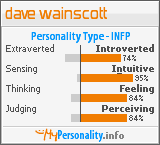
I have often though, said and taught that this (the Myers-Briggs phenomenon Priebe talks about in the article I will link) happens, but not due to reading anyone else making a logical case for it, but because I intuitively felt that it did..,
--which I realized makes sense, as I am off the charts "intuitively feeling" (NF) on Myers-Briggs.
That means I can trust my NF...
 ..unless I can't (:
 I have often suggested that if each pair of preferences is a pictured as a spectrum,
imagine folks who are strong on one "end" looping around to act like their "opposite."
True also of fundamentalisms of the left and right..
Is that "surrational," Mark DeRaud?
Is that loopy?
 You know, I sometimes picture the "line" as more of a mult-loopy helix (Hegelian?) helix..like this diagram of sex(uality) from the cover of Foucault's :"The History of Sexuality">>
I don't see anywhere in the book where this diagram is explicitly explained, but if Rob Bell is right..
For many, sexuality is simply what happens between two people involving physical pleasure. But that's only a small percentage of what sexuality is. Our sexuality is all the ways we strive to reconnect with our world, with each other, and with God." (Rob Bell, "Sex God," p. 42).
...it's inevitably also a picture of life. let alone our personality preferences.
In Myers-Briggs, it seems that when one person is E or I, not matter how far in one direction, their "vertedness" loops and weaves.

Or check out like Kegan's developmental chart, "a helix of evolutionary truces"
I can't help it. I just intuitively feel that life itself is a
holy helix.
Anyway..the article, with an example:
------------------------------------------------------------
"How Each Myers-Briggs Type Contradicts Their Own Stereotype" by Heidi Priebe.
Full article here
Excerpt about my type:
..because it's all about me! (:
--which I realized makes sense, as I am off the charts "intuitively feeling" (NF) on Myers-Briggs.
That means I can trust my NF...
 I have often suggested that if each pair of preferences is a pictured as a spectrum,
imagine folks who are strong on one "end" looping around to act like their "opposite."
True also of fundamentalisms of the left and right..
Is that "surrational," Mark DeRaud?
Is that loopy?
 You know, I sometimes picture the "line" as more of a mult-loopy helix (Hegelian?) helix..like this diagram of sex(uality) from the cover of Foucault's :"The History of Sexuality">>
I don't see anywhere in the book where this diagram is explicitly explained, but if Rob Bell is right..
For many, sexuality is simply what happens between two people involving physical pleasure. But that's only a small percentage of what sexuality is. Our sexuality is all the ways we strive to reconnect with our world, with each other, and with God." (Rob Bell, "Sex God," p. 42).
...it's inevitably also a picture of life. let alone our personality preferences.
In Myers-Briggs, it seems that when one person is E or I, not matter how far in one direction, their "vertedness" loops and weaves.

Or check out like Kegan's developmental chart, "a helix of evolutionary truces"
I can't help it. I just intuitively feel that life itself is a
holy helix.
Anyway..the article, with an example:
------------------------------------------------------------
"How Each Myers-Briggs Type Contradicts Their Own Stereotype" by Heidi Priebe.
Full article here
Excerpt about my type:
..because it's all about me! (:
INFP
Stereotype: INFPs are fragile emotional snowflakes who cannot deal with facts or hard logic.
Reality: Though INFPs certainly prefer using emotion over logic, they are more than capable of getting things done when they need to. This type can actually be incredibly resourceful and organized, as they will go to any lengths necessary in pursuit of what they believe is right. As a highly pensive type, INFPs are quite focused and often even mistype as judgers.
Monday, December 22, 2014
Rob Bell's new chapter
 Four links
Rob Bell: A Symbol Of Every Evangelical Who’s Been Shunned For Asking Questions\
What the Continued Crucifying Of Rob Bell Says About Modern Christianity
Rob Bell show: first review
"If you could somehow watch the first episode in a vacuum—without any knowledge of Bell’s past writings, theological questions or critics—you might assume that the host was a conventional pastor attempting to bring Bible teachings to a prime-time audience in a relatable way" The Rob Bell Show’ Premiere Was About the Cross
"If you could somehow watch the first episode in a vacuum—without any knowledge of Bell’s past writings, theological questions or critics—you might assume that the host was a conventional pastor attempting to bring Bible teachings to a prime-time audience in a relatable way" The Rob Bell Show’ Premiere Was About the Cross
Tuesday, August 12, 2014
Gungorgate: banned for agreeing with C.S. Lewis (and having Rob Bell and Rachel Held Evans help with their CD)

From World Magazine:
"Gungor Drifts From Biblical Orthodoxy.”
Michael Gungor responds:
From the Gungor Facebook:
"We have now had three concerts cancel and Lifeway Christian bookstores has removed us from their shelves for Michael agreeing with C.S. Lewis rather than Ken Ham about Genesis. Here's an interview with biologos.org about why Michael stands behind his position." http://biologos.org/blog/faith-after-literalism-an-interview-with-michael-gungor
--
Previous posts:
Wednesday, August 06, 2014
misundertaking Matthew: "If your brother offends you" ?

Keep an eye out for the character (?) I play:
a Bible-quoting..and Bible-throwing... pastor who loves Matthew 18 too much.
I'll see you after the fine film.
SOOO... If I can't find anyone to blame, I often say,
"It's San Andreas' fault." (:
In the common mistranslation,
misunderstanding,
and misundertaking..
of Matthew 18..
for once.. it's not King James' fault.
This time, it's Douay-Rheims' fault.
They translate:
15 But if thy brother shall offend against thee, go, and rebuke him between thee and him alone. If he shall hear thee, thou shalt gain thy brother. 16 And if he will not hear thee, take with thee one or two more: that in the mouth of two or three witnesses every word may stand. 17 And if he will not hear them: tell the church. And if he will not hear the church, let him be to thee as the heathen and publican.
If you would ask most evangelicals to fill in the blank below, I think they would say "offend""
"If your brother ___against you... .tell it to the church"
Why is that? How did that happen? The Greek is clear: ἁμαρτήσῃ=sins.
Maybe the Dhouay-Rheims sounds King James-y enough that it must be true (Ironic that it's a Catholic translation, and many fundies are quoting it). And it is, like many KJV problems, a matter of how language/words havechanged ("Suffer the little children," anyone? Don;t get me started on "..)
Compare translations (link), and note that almost all translate "sin against you."
Even King James.
Side note..One translation (BBE) could be problematic (if anyone actually used it):
"If your brother does wrong to you" works (as in "he does you wrong" by sinning against you), but it can be misread as what he does is only wrong to you (as in "in your opinion, he does wrong), not towards you.
In our day, Christians disagreeing with each other over differences in denomination, doctrine, weaker brother/sister issues. preferred Bible translation, ecclesiology, tattoos, view of Rob Bell ... or (gasp!) politics is enough for them to diss or divorce each other. We get so defensive and so offended. And we can quote chapter and verse to unfriend or excommunicate them..so we think.
Whatsup with that?
One way to read Matthew 18 is as cluster of answers to the disciples' question at the top of the act: "Who's great?" Jesus answers rabbinically:
Question #1: Who is Greatest?N. T. Wright, commenting on this passage:
2-17 Responses (each are counter proposals)2-10 Response #1: Children2-4 Counter Proposal: Accept children5-9 Threat: If cause scandal10 Show of force: Angels protect12-14 Response #2: Sheep12-14 Counter Proposal: Search for the 1 of 100 who is lost15-17 Response #3: Brother who sins (counter proposal)15a Hypothetical situation: If sin15-17 Answer: Attempt to get brother to be reconciled17b If fail: Put him out and start over -Camp/Roberts, Fresno Pacific University
"It's time in today's culture that we took reconciliation seriously." (Matthew for Everyone, Vol 2, p. 34)
Gee, why didn't be say , "It's time in today's culture that we took confronting brothers and sisters who offend us theologically or politically seriously."??
 ----------------Read verses 15-17 and then ask yourself:
"What did it mean in their historical world to treat people like
"tax collectors and sinners?"
Two answers
1)Don't allow them in your bounded set.
2)How did Jesus treat tax collectors and sinners? In a centered set way. Tony Jones writes:
but because anyone, including Trucker Frank, can speak freely in this church, my seminary-trained eyes were opened to find a truth in the Bible that had previously eluded me.”...That truth emerged in a discussion of Matthew 18's "treat the unrepentant brother like a tax collector or sinner.":
"And how did Jesus treat tax collectors and pagans?" Frank asked aloud, pausing, "as of for a punchline he'd been waiting all his life to deliver,"....., "He welcomed them!""
More on Trucker Frank here; he can interrupt my sermons anytime..

"What did it mean in their historical world to treat people like
2)How did Jesus treat tax collectors and sinners? In a centered set way. Tony Jones writes:
but because anyone, including Trucker Frank, can speak freely in this church, my seminary-trained eyes were opened to find a truth in the Bible that had previously eluded me.”...That truth emerged in a discussion of Matthew 18's "treat the unrepentant brother like a tax collector or sinner.":
"And how did Jesus treat tax collectors and pagans?" Frank asked aloud, pausing, "as of for a punchline he'd been waiting all his life to deliver,"....., "He welcomed them!""
More on Trucker Frank here; he can interrupt my sermons anytime..
--
Hey, if you must have King James, and want a verse on an offending brother, how about this or this?
Friday, June 06, 2014
Happy Lee on the mimetic liturgy of the atonement

Go to it:
What if most of what you’ve been taught shifted, bringing all your beliefs crashing down?
When folks say, “I don’t understand how you can believe in a God that demands a blood sacrifice to appease his sense of justice” my initial reaction is to not say much at all.
Mainly, I didn’t have the tools for a...full article here
Thursday, February 13, 2014


Wednesday, February 05, 2014
U2theology on Interference
Interesting that almost all the articles listed under a current click of the tab called "U2 Commentary, Essays and Analysis" on the Interference site are explicitly theological.
Andrew William Smith:
Pastor Jonathan Martin:
Ted Trost:
Snith
Andrew William Smith:
Sacred Stables, Sacred Stadiums: Lifting the Veil on “Zooropa” at Christmas by Andrew William Smith
...........Something got hidden away in the starry starburst of rising young rockstars. God gets lost in man chasing mammon. God gets lost from man. Like God hiding from Moses in the rocks, this is rock that hides God only to reveal God. Bono recalls, “I wanted to get away from the weight of where I was going. I wanted to fly. . . . And I have no religion, I don’t know what’s what. There is a line in the New Testament [John 3:8] which says that the Spirit moves and no one knows where it comes from or where it is going. It’s like a wind. I have always felt that about my faith. Religion is often the enemy of God because it denies the spontaneity of the Spirit and almost anarchistic nature of the Spirit.”
At its dirty Christmas core, the Christ story is an anarchic breaking through. The veil of colored lights gets lifted, and we get lifeblood. The dirty story of Christmas finds this unmarried teenager and faithful fiancé finding the unfound, unfettered scandalous incarnation of a baby king.
The “Zooropa” narrative of human-techno hybrids in hope and fear throws back a couple of millennia to the divine-human dangerous idea of messianic and revolutionary Jesus. Bono sings, “Let’s go to the overground/Get your head out of the mud baby/Put flowers in the mud baby/Overground.”
Jesus Christ is the flower in the mud, the flower in the gunbarrel of history, saying love still wins. The author of Love Wins, Rob Bell, in his followup treatise What We Talk About When We Talk About God, rips the veil even further.
Referencing Hebrews 10:20, Bell suggests the Christ-event ripped open history and lifted the veil. Bell proclaims, “[T]his ripping was a picture of how, because of Jesus, we can have new, direct access to God. […T]he curtain ripping also means that God comes out, that God is no longer confined to the temple as God was previously. God, of course, was never confined by a building. The point of the story is that our understanding of God was.”
Perhaps Bell and Bono of the post-Zoo period are onto the same thing: ripping away the veils between secular and sacred dualities, human and divine dichotomies. When the veil of lights lifted from the 360-stage to reveal the band again, the new setting set fires in souls..
.Then the next U2 rock show, whether in stadiums or back to arenas, can be again, like Bell writes, a place to say: “You are on holy ground wherever you are, and Jesus comes to let us know that the whole world is a temple because we’re temples, all of life is spiritual, all space sacred, all ground holy.” Even stables of the first century, even stadiums of the 21st century.
Pastor Jonathan Martin:
U2 & the Holy Ghost iPod Shuffle
...There may well be a rational explanation to the timing and sequencing of those songs on my iPod that day, but even if that were true, it wouldn’t change or diminish the impact of what I heard. My response was not irrational, but it transcended my capacity for reason. I wasn’t just hearing U2 play a rock song. I was hearing an ancient song. I was hearing the music of God’s love in the same way I believe David heard it in the field as a boy. It was the wonder that called me back to who I really am, that called me forward to who I am meant to become. That’s what music does; that’s what wonder does. God uses these things to remind us of who we really are. –Jonathan Martin
Ted Trost:
Transgressing Theology: Locating Jesus in a “F—ed-Up World” by Religious Studies Prof Ted Trost
In the tradition of Ronald Reagan and Pink Floyd (in very different contexts), U2′s songs amount to the plea: “tear down the wall.” Within the framework of Christian doctrine, U2 put forward a “transgressive theology.” In these POP tunes, U2 transgress the borders between spirit and flesh, sacred and profane, high and low. On this album, the “Popmart” as medium of pop culture in the context of commercial exchange becomes hallowed ground. To be extreme about it: God is Pop.....
The POP album opens in the tradition of David..
...this pursuit includes the search for “baby Jesus under the trash”—that is, in the midst of the muck and mire of human existence, once again challenging the dividing line between sacred realm and the earth-bound. Locating Jesus under the trash is not the same thing as positioning him “at the right hand of God the Father Almighty,” to quote a doctrinal formulation. Indeed (as Bono will sing in a different but related context in the song “If God Will Send His Angels”): “the High Street never looked so low.” Still, there’s something hauntingly familiar about this dislocation to “the places where no flowers grow,” to the realm of the discarded, to the barn out back after permission to enter the inn has been withheld.POP becomes a theological assertion. It claims the commercial realm as God’s realm. link
Snith
Flamethrower Holiness: Bono, Brueggemann, & the Psalms (Headphone Devotionals, part two)
...Rock music as a daily devotional tool surely gets practiced by runners, walkers, weight-lifters, and coffee-sipping hipsters on the daily, but to theorize such in a theological-liturgical manner means new terrain. Like with the songs “Bad” or “Drowning Man,” like “Vertigo” or “Wake Up Dead Man,” the psalms have an aching rock-bottom blues disposition that’s not pretty or pious. Even ever popular and too readily categorized U2, rock music itself remains a renegade force in culture, still largely undomesticated in its musicological meme. Brueggemann begs us to see past what he calls “equilibrium” to that queasy and uneasy place that the Psalter takes us, liminal “experiences of dislocation and relocation” because it “is experiences of being overwhelmed, nearly destroyed, and surprisingly given life that empower us to pray and sing.”
Check out the Headphone Devotionals project blog where we can pray the U2 songs together: http://headphonedevotionals.blogspot.com/ link
Wednesday, January 15, 2014
a biblical post about being biblical by not calling anything "biblical"
In a similar vein, hear Rachel Held Evans (in "A Year of Biblical Womanhood"), suggest that the Bible (or "biblical") shouldn't be an adjective, either:
The Bible isn’t an answer book. It isn’t a self-help manual. It isn’t a flat, perspicuous list of rules and regulations that we can interpret objectively and apply unilaterally to our lives.
The Bible is a sacred collection of letters and laws, proverbs and poetry, philosophy and prophecies, written and assembled over thousands of years in contexts very different from our own, that tells the complex, ever-unfolding story of God’s interaction with humanity.”
When we turn the Bible into an adjective, and stick in front of another loaded word (like “womanhood,” “politics,” “economics,” “marriage” and even "equality") , we tend to ignore or even downplay the parts of the Bible that don't fit our tastes. In an attempt to simplify, we try to force the Bible's cacophony of voices into a single tone and turn a complicated, beautiful, and diverse holy text into a list of bullet points we can put in a manifesto or creed. More often than not, we end up more committed to what we want the Bible to say than what it actually says. p. 294
A few pages later:
And I believe that my calling, as a Christian, is the same as that of any other follower of Jesus. My calling is to love the Lord with all my heart, soul, mind, and strength, and to love my neighbor as myself. Jesus himself said that the rest of Scripture can be rendered down into these two commands. If love was Jesus’ definition of “biblical,” then perhaps it should be mine.
Basically the same section in a CNN article:
My Take: The danger of calling behavior ‘biblical’
Related:
Monday, December 09, 2013
" If you’re trying to start a religion, this is a crap way to do it"

..If you read the accounts back to back, there’s a lot of running and excitement and general mayhem. Setting aside the issue of whether a man actually rose from the dead (For the record, I’m a believer-the sheer poetry alone is so crazy good…), the four accounts of Jesus rising from the dead contain a number of jumbled details that render that narrative fairly jumbled, to say the least.
There are several responses to these differences:
Some ignore them. They simply repeat again and again that this God’s word and so we take it in faith, we shouldn’t question its truth, etc.
Others take these differences as clear and tangible proof of its susceptibility. See? It’s all myth, fable, miracle, fantasy, etc, borrowed from the tales of the day.
I find both perspectives boring.Before I explain, though, a few thoughts about propaganda.
To summarize, this is the worst propaganda. Ever. If you’re trying to start a religion, this is a crap way to do it. How are you going to inspire confidence if you can’t even report the details accurately with one voice?
Not to mention the women, which we will mention because the gospel writers all mention the women. In these accounts, the writers all affirm that it’s the women who first realized (say it with me now)
Dude is alive!
Women didn’t have much in the way of respect as we think of it in the first century, so much so that their word meant next to nothing in court. Why, in a culture that had such little regard for the witness of women, would you tell a story that hinges to a large degree on the witness of women?
Second, Matthew writes that Jesus met up with his crew (posse?) on a mountain in Galilee and
when they saw him some worshipped him; but some doubted.
Wha…? They doubted?Why would Matthew include this?If the point of your book is that Jesus is the Messiah, the King, the long awaited Savior of the World, the one everybody has been waiting for, why would you reach the crescendo of the story and then include a line about some of his followers doubting? Doesn’t that ruin the moment? Doesn’t this undermine everything you’ve been saying in your story?
(Picture Jesus standing there on the mountain: You’re doubting? Seriously, peoples!!? I died and came back, I got nothing more impressive than that! If that doesn’t do it for you what more can I do?)
And while we’re at it, I have to mention what Jesus says when he rises from the dead. You know, right? You are familiar with his classic line, the profound saying, the brilliant truth he utters when he shows up after, oh yes, conquering death:
Do you have anything here to eat?
and in another account
Do you guys have some fish?
Because, as we all know, you can work up quite an appetite resurrecting…
That said, a question for you: If something extraordinary did happen, how would it be remembered?
Which leads to another question:If someone did rise from the dead, how would that story be told? In a calm and collected and polished manner or in a slightly haphazard way that buzzed and hummed and rattled with the electricity that comes from experiencing something unexpected and extraordinary that you don’t really have categories for?
Which leads to another:Is the haphazard humanity of it all reason to dismiss it or signs that it’s an authentic record of what happened?
Which leads to another question:When Matthew tells us that some his followers doubted, does this undermine the story or is the exact kind of honesty that reflects how people actually are?
When each of the gospel writers include the part about the women being witnesses, why risk it? What a strange thing to include knowing it would discredit their story, unless women actually were the first witnesses.
How open minded are you?What’s possible?Is there a new creation bursting within this one?Did something happen that changes everything?Is the tomb empty?What happens if you actually live like it’s true?What does this story do to your heart?
Subscribe to:
Comments (Atom)