Welcome! You have accidentally reached the blog of a heteroclite follower of Jesus: dave wainscott. I'm
"pushing toward the unobvious" as I post thinkings/linkings
re: Scripture, church and culture. Hot topics include: temple tantrums, time travel, sexuality/spirituality, U2kklesia, role of the pastor, God-haunted music/art..and subversive videos like these.
One way to look at string theory is that everything is made of vibrating strings/ music. And now...what if we found that a jewel was at the heart of it all? "The amplituhedron looks like an intricate, multifaceted jewel in higher dimensions." See:
Xenochrony is a studio-based musical technique developed at an unknown date, but possibly as early as the early 1960s, by Frank Zappa,
who used it on several albums. Xenochrony is executed by extracting a
guitar solo or other musical part from its original context and placing
it into a completely different song, in order to create an unexpected
but pleasing effect. He said that this was the only way to achieve some rhythms.
..The word derives from the Greek words ξένος (xenos), strange or alien, and χρόνος (chronos), time. Link -------------------------------------------- Article:
Temporality, Intentionality, and Authenticity in Frank Zappa’s Xenochronous Works by Andre Mount; Excerpt: Temporality To the uninformed listener, there is no strong evidence to suggest that Zappa’s “Friendly Little Finger,” from the 1976 album Zoot Allures,[4] is anything other than a recorded document of an ensemble performance. The piece begins with a brief introduction featuring a repeated riff
performed on guitar, marimba, and synthesizer. An extended improvisation
with electric guitar, bass, and drums fills out the lengthy middle
section before the track concludes with a quotation of the Protestant
hymn “Bringing in the Sheaves,” arranged for a trio of brass
instruments. Despite its apparent normalcy, however, “Friendly Little
Finger” combines materials from four distinct sources spanning three
years of Zappa’s career. The primary recording—a guitar solo with a droning bass
accompaniment—was recorded in the dressing room of the Hofstra
University Playhouse as a warm-up before a performance on October 26,
1975. Several months later, Zappa added an unrelated drum track
originally intended for use on a different song (“The Ocean is the
Ultimate Solution”[5])
and a second bass part recorded at half speed. These three recordings,
all appearing in the middle solo section, comprise the xenochronous core
of the piece. To this, Zappa superimposed two additional recordings.
The introduction comes from the same session as the added bass part, and
the coda was recorded several years earlier, during a session for the
song “Wonderful Wino.” As Example 1 makes clear, the result of Zappa’s editing is a
moderately dense network of temporally disjunct recordings. How is it
that such seemingly disparate recordings happened to come together in
this way? What inspired Zappa to take such an approach to manipulating
recorded sound? Of course, examples of overdubbing in American popular
music can be found at least as far back as the 1940s—recall Sidney
Bechet’s One Man Band recordings in which each instrument was performed
separately by Bechet himself. But while such tricks had become old hat
by the mid 1970s, xenochrony stands out for it also has obvious ties to
the twentieth-century art-music avant-garde. Despite his continuing reputation as a popular musician, Zappa was
remarkably well read in the theoretical discourse surrounding
avant-garde art music, particularly with regards to musique concrète and
tape music. He expressed an ongoing interest in John Cage’s chance
operations, for example, trying them out for himself by physically
cutting recorded tapes and rearranging the pieces at random for the 1968
album Lumpy Gravy.[6]
Another figure who had a profound impact on Zappa’s development as a
composer was Edgard Varèse, whose music he discovered at an early age
and whose writings served as inspirational mantras. Given this
fascination with the avant-garde, xenochrony may be best understood as a
conscious attempt by Zappa to model himself on these influential
figures. His own approach to music and composition would therefore
require an analogous theoretical foundation. Xenochrony is closely tied to Zappa’s conception of temporality.
Zappa often described time as a simultaneity, with all events occurring
at once instead of chronologically. Toward the end of his life, in an
oft-quoted conversation with cartoonist Matt Groening, Zappa explained
that the idea was rooted in physics:
I think of time as a spherical constant, which means that
everything is happening all the time. […] They [human beings] take a
linear approach to it, slice it in segments, and then hop from segment
to segment to segment until they die, and to me that is a pretty
inefficient way of preparing a mechanical ground base for physics.
That’s one of the reasons why I think physics doesn’t work. When you
have contradictory things in physics, one of the reasons they became
contradictory is because the formulas are tied to a concept of time that
isn’t the proper model.[7]
Bob Marshall: In your work with "xenochrony", are you satirizing
editing, the way you put things together, besides the
technical innovation of doing it?
Frank Zappa: "Xenochrony" means strange synchronizations. Am I
satirizing editing? I don't know whether the technical
process of editing is enough of a commonly understood
phenomenon that you could satirize it. You can't made a joke
about something that people don't know exists. So, I would
say that's not part of it.
Bob Marshall: How would you relate "xenochrony" to the time/rate thing
we discussed earlier?
Frank Zappa: Well, a classic "xenochrony" piece would be "Rubber
Shirt", which is a song on the SHEIK YERBOUTI album. It takes
a drum set part that was added to a song at one tempo. The
drummer was instructed to play along with this one particular
thing in a certain time signature, eleven-four, and that drum
set part was extracted like a little piece of DNA from that
master tape and put over here into this little cubicle. And
then the bass part, which was designed to play along with
another song at another speed, another rate in another time
signature, four-four, that was removed from that master tape
and put over here, and then the two were sandwiched together.
And so the musical result is the result of two musicians, who
were never in the same room at the same time, playing at two
different rates in two different moods for two different
purposes, when blended together, yielding a third result which
is musical and synchronizes in a strange way. That's
xenochrony. And I've done that on a number of tracks.
Bob Marshall: What is the idea behind that? Or is it just an
interesting sound?
Frank Zappa: What is the idea behind it? Suppose you were a composer
and you had the idea that you wanted to have a drum set
playing expressively and intuitively, eleven-four, at a
certain tempo while an electric bass player is doing exactly
the same thing in another tempo in another time signature, and
you want them to do this live on stage and get a good
performance. You won't get it. You can't. You can ask for
it, but it won't happen. There's only one way to hear that,
and that's to do what I did. I put two pieces of tape
together.
Gerald Fialka: Do you realize it by chance though? Or do you say "I'm
going to try this"?
Frank Zappa: That's what I do every day. I'm going to try this, and the
stuff that works you keep and the stuff that doesn't you throw
it away. I thought that one worked. That's why it's on the
record Link
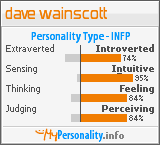
I have often though, said and taught that this (the Myers-Briggs phenomenon Priebe talks about in the article I will link) happens, but not due to reading anyone else making a logical case for it, but because I intuitively felt that it did..,
I have often suggested that if each pair of preferences is a pictured as a spectrum,
imagine folks who are strong on one "end" looping around to act like their "opposite."
True also of fundamentalisms of the left and right..
You know, I sometimes picture the "line" as more of a mult-loopy helix (Hegelian?) helix..like this diagram of sex(uality) from the cover of Foucault's :"The History of Sexuality">>
I don't see anywhere in the book where this diagram is explicitly explained, but if Rob Bell is right..
For many, sexuality is simply what happens between two people involving physical pleasure. But that's only a small percentage of what sexuality is. Our sexuality is all the ways we strive to reconnect with our world, with each other, and with God." (Rob Bell, "Sex God," p. 42).
...it's inevitably also a picture of life. let alone our personality preferences.
In Myers-Briggs, it seems that when one person is E or I, not matter how far in one direction, their "vertedness" loops and weaves.
Or check out like Kegan's developmental chart, "a helix of evolutionary truces"
I can't help it. I just intuitively feel that life itself is a holy helix.
Anyway..the article, with an example: ------------------------------------------------------------ "How Each Myers-Briggs Type Contradicts Their Own Stereotype" by Heidi Priebe. Full article here
Excerpt about my type: ..because it's all about me! (:
INFP
Stereotype: INFPs are fragile emotional snowflakes who cannot deal with facts or hard logic.
Reality: Though INFPs certainly prefer using emotion over logic, they are more than capable of getting things done when they need to. This type can actually be incredibly resourceful and organized, as they will go to any lengths necessary in pursuit of what they believe is right. As a highly pensive type, INFPs are quite focused and often even mistype as judgers.
I'm not a big fan of TBN (and not sure I could watch it nonstop like a certain brave and sarcastic Lutheran pastor), but I caught an episode of "Behind the Scenes" from Jerusalem which hosted Father Andrew (a Greek Orthodox monk) and Raafat Girgis (a Coptic doctor). Interesting interview with Father Andrew about the Orthodox tradition, as well as Ryan's Guitars Project (Three Faiths, Six Strings, Guitars, Not Guns(click and check that out) and the Jesus Prayer.
But what really caught me was the worship song in the episode (sadly, no audio of the song, and not clarified where it is); I post some still shots of it below to highlight the (translated) lyrics. It starts at the 21:46 mark; click here if the video doesn't show at bottom of this post.
Western Christians don't often think in terms of lament--or are not comfortable with it as worship--even though the biblical psalms are loaded with laments (Ps 22 etc)...and don't get me started on U2 songs/psalms of lament.
Eastern Christians/Orthodox get lament. Of all people, Middle Eastern Christians have something to lament about.
U2's road manager for 33 years, the amazing Dennis Sheehan died suddenly last night here in LA. Dennis was a calm and kind Christian man. The team is heartbroken so Adam, Larry, Edge, and Bono asked me to sharesome scripture, words of comfort, and pray with them right before they walked on stage tonight. After sharing the#ChooseJoystory from my son's death, I asked "So how do you go out and do a concert when your heart is hurting?" Bono said "We choose joy!" Right. Pray for Pam who lost the love of her life. link
That version of "choose joy" is not some "name-it, claim it" happy-clappy motto (Denial is not just a river in Egypt), but a hardwon naked trust in the endless love that is know only through the crucible of endless grief. That doesn't preclude anger..even yelling at life, grief, the grieved...and God.
"I walk through the valley of the shadow of death. Comfort me, COMFORT ME, COMFORT ME!!!" -Bono at end of "Wolves." #RIPDennis#U2ieTour
Last night, at the end of "Raised by Wolves," itself a stunning public griefsong, Bono snippeted Psalm 23 in the outro (as usual), this time followed by "Comfort me. COMFORT ME, COMFORT ME!" (see video below). Psalm 22 and
23 are two sides of the same whole and holistic grieflove lamentjoyprayer (see"The Lord Be With You...Even When He’s Not!")
Peace of heart...finding love limitless in the midst of limanality and limitless grief is the only ways and means of knowing anything. Not to mention are only lens for knowing as we are known. ( By the way, we can know the Unknown Calle)r.
Note the last line of that excerpt of "California"-- "there is no end to love" ---is itself a clear nod to Paul's 1 Corinthian's 13 insistence that "love never ends."
But do check well the line before that, which has baffled me: "There's no end to grief. That's how I know there is no end to love."
This apparent nonsequitur and profound truth is also thoroughly Pauline. NT Wright has detected in Scripture, notably in Paul, an "epistemology of love."
He even suggests that it must inevitably worked out in art; specifically music...even more specifically "musical performance":
....Is this then a reinforcement, from a musical point of view, for Dorothy L. Sayers’ thesis in The Mind of the Maker, to which I referred earlier?Is there then indeed a Trinitarian pattern to the work of the artist or writer which, reflected back, provides some kind of evidence of who God may be?I am not sure that this thesis can be sustained by itself, or that a natural theology built up by that means without help from elsewhere would arrive at anything approximating to the God and Father of Jesus, the giver of the Spirit.But when the creative and aesthetic project meets the scriptural revelation — mediated, of course, through the thinking of the household of faith — then the two can perhaps at least be complementary.I have explored elsewhere what I have called ‘an epistemology of love’, in which the sterile opposition between ‘objective’ and ‘subjective’ reductions of ‘knowing’ are transcended. I think, and hope, that what Paul Spicer and I discovered in our work on the Oratorio was something like that: a love for the subject-matter, a love worked out in art and scholarship, through which we both learned and grew and grasped afresh some of the central matters of Christian faith. And if this is true it may be a pointer to something else - something which the whole Theology Through the Arts project is all about: the non-reducible, and not merely decorative, function of imagination within historical work (as Collingwood insisted) and also theological endeavour, as well as in musical composition and performance.
I realize that I have thus arrived, as a non-specialist, at more or less what Aquinas says in his famous formulation: ‘As grace does not destroy but perfects nature, it is right that natural reason should serve faith just as the natural loving tendency of the will serves charity.’There is of course a dangerous circularity about reaching that conclusion about method precisely by engaging in what, I hope, might be an instance of it happening in practice.But I think I have said enough to show that this is a fruitful area for further enquiry and experiment, especially if — though this would be a matter for specialists to enlighten me further — what Aquinas meant by ‘natural reason’ is a large enough category to embrace aesthetic and artistic integrity, the composer’s and conductor’s sense of ‘what works’.Certainly in this case the composer’s — and conductor’s — aesthetic and artistic integrity ‘served faith’ in a way that makes the ordinary jobbing theologian and preacher jealous.If all theology, all sermons, had to be set to music, our teaching and preaching would not only be more mellifluous; it might also approximate more closely to God’s truth, the truth revealed in and as the Word made flesh, crucified and risen.
Is this how the band got through the concert last night?
Is this how they get through every night?
I too have felt (well, maybe not; which is itself the problem) the deaths of a series of loved ones:
a cousin who was like a brother, dear friends from church...
and I have grieved not grieving.
And even though I have been weaning myself from the evangelical idol of certainty in recent years (and that is a grieving indeed)..
in recent weeks, thanks to U2's "California," and their healthy navigation of their own grieving, I have been learning and leaning into all that I need to know.
One of his best stories is Love in the Ruins. It is the first of two novels featuring the character Tom More, a fictional descendent of Sir Thomas More, “the man for all seasons” who, in the 16th century, was the Speaker of the House of Commons and the Lord Chancellor of England – and who refused to go along with Henry VIII’s desire for a divorce, so lost his head and his life. Percy’s More is a bad Catholic, a wandering husband who drinks too much, and a brilliant doctor. Written with a finger to the wind to the social turmoil of the 1960s, Percy wrote of Southern life embodied in the institutional frailties of the Love Clinic, a place where physicians and patients are thrown together in their hopes, longing to belong to someone somewhere.
Literally and metaphorically staggering his way through the story, More develops a machine that promises to save the day for the Love Clinic; he calls it “the qualitative/quantitative ontological lapsometer.” For anyone with ears to hear, attentive to the Enlightenment Project of the last few hundred years, Percy here captured the fundamental flaws of the modern world, fictional as they were in imagination and conception. When More is asked about the nature of a lapsometer, he replies – innocent as a dove, wise as a serpent – “It measures lapses – in the human soul.”
The dreams and debates of modernity, cascading as they are into postmodernity, are always at the heart of the human condition. It cannot be otherwise, as we are never more and never less than sons of Adam and daughters of Eve. So we take our place as folks who long to love and to be loved. Percy understood that with an unusual eye: historically, philosophically, psychologically, politically, and, yes, theologically, seeing the complexity for Everyman and Everywoman. We want love, yet we also know how hard it is to love and to be loved.
There’s the rub. To know and to love; to love and to know. Can both happen at the same time? Can we do both? Can we have both?
Most of the time it seems impossible. For reasons beyond the scope of this short essay, I would argue that human beings more often than not choose cynicism or stoicism as alternative accounts of life and of love. Rather than an epistemology of love, a way of knowing that is manifest in loving, we choose to protect our hearts, “knowing” with the poet Byron that “he who knows the most mourns the deepest.” To know is to despair. To know is to flounder. To know is to mourn. link
A good section of Deanne Galbraith's "Meeting God in the Sound" is available to read on Google Books, pp. 120-126 here . It's a chapter in The Counter-Narratives of Radical Theology and Popular Music: Songs of Fear and Trenbling (MIke Grimshaw, ed.) (HT: Beth Maynard's post, Sacralizing the profane and profaning the sacred)
The headings are:
U2's Two Audiences: Two Hearts Beat as One
Immersion in a Sonic Baptism
Performing Future Hymns in a Stadium Rock Cathedral
Here (page 111-141) in a PDF of a book of selected essays of Charles W Moore, is Moore's seminal, prescient 1965 essay "You Have to Pay for Public Life"(from Perspecta, the architectural journal of Yale)..
If that goes offline, the complete essay, minus a few sentences, is here :pp 93-103. Also: 112-141 here some pages missing, including the first (part of which is here). -- Excerpt: This issue of Perspecta considers monumental architecture as part of the urban
scene. I was asked to ferret out some on the West Coast, especially in California.
Perspecta’s editors suspected, I presume, that I would discover that in
California there is no contemporary monumental architecture, or that there is
no urban scene (except in a sector of San Francisco), or more probably, that
both monumental architecture and the urban scene are missing. Their suspicions
were well founded; any discussion from California in 1964 about monumental
urban architecture (as it is coming to exist, for instance, in New Haven) is bound
to be less about what we have than about what we have instead. Any discussion of monumental architecture in its urban setting should
proceed from a definition of (or, if you prefer, an airing of prejudice about)
what constitutes “monumental,” and what “urban” means to us. The two
adjectives are closely related: both of them involve the individual’s giving up
something, space or money or prominence or concern, to the public realm.
Monumentality, I take it, has to do with monuments. And a
monument is an object whose function is to mark a place, either at that place’s
boundary or at its heart. There are, of course, private monuments, over such
places as the graves of the obscure, but to merit our attention here, and to be
of any interest to most of the people who view it, a monument must mark a
place of more than private importance or interest. The act of marking is then a public act, and the act of recognition an expectable public act among the
members of the society which possesses the place. Monumentality, considered
this way, is not a product of compositional techniques (such as symmetry about
several axes), of flamboyance of form, or even of conspicuous consumption of
space, time, or money. It is, rather, a function of the society’s taking possession
of or agreeing upon extraordinarily important places on the earth’s surface,
and of the society’s celebrating their pre-eminence.
A version of this agreement and this celebration was developed by Jose
Ortega y Gasset, in The Revolt of the Masses, into a definition of urbanity itself.
“The urbs or polis,” he says, “starts by being an empty space, the forum, the
agora, and all the rest is just a means of fixing that empty space, of limiting its
outlines. The square, thanks to the walls that enclose it, is a portion of the countryside which turns its back on the rest, eliminates the rest, and sets up in opposition to it. Ortega y Gasset’s product is the city, the urban unit based upon the
Mediterranean open square, a politically as well as physically comprehensible
unit that people used to be willing to die for. The process of achieving an
urban focus is the same as that of achieving monumentality: it starts with
the selection, by some inhabitants, of a place which is to be of particular
importance, and continues when they invest that place with attributes of
importance, such as edges or some kind of marker. This process, the establishing
of cities and the marking of important places, constitutes most of the physical
part of establishing civilization. Charles Eames has made the point that the crux
of this civilizing process is the giving up by individuals of something in order
that the public realm may be enhanced. In the city, that is to say, urban and
monumental places, indeed urbanity and monumentality themselves, can occur
only when something is given over by people to the public. Planners have a way of starting every speech by articulating their
(private) discovery that the public body’s chief concern is people. The speech
then says unrelatedly that it’s too bad the sprawling metropolis is so formless.
It might well be that if the shibboleth about people were turned inside out,
if planning efforts went toward enlarging people’s concerns—and sacrifices—
for the public realm, that the urban scene would more closely approach the
planners’ vision, and that the pleasures of the people would be better served. The most evident thing about Los Angeles, especially, and the other
new cities of the West is that in the terms of any of the traditions we have inherited, hardly anybody gives anything to the public realm. Instead, it is
not at all clear what the public realm consists of, or even, for the time being,
who needs it. What is clear is that civic amenities of the sort architects think
of as “monumental,” which were highly regarded earlier in the century, are
of much less concern today. A frivolous but pointed example is the small city
of Atascadero, which lies in a particularly handsome coastal valley between
Los Angeles and San Francisco. It was first developed in the ‘20s as a realestate
venture with heavy cultural overtones and extensive architectural
amplification. Extraordinarily ambitious “monumental” architecture popped
up all over the townsite. Buildings of a vague Italian Romanesque persuasion
with a classic revival touch, symmetrical about several axes, faced onto wide
malls punctuated or terminated by Canovesque sculpture groups. The effect
was undeniably grand, if a bit surreal, exploiting wide grassy vistas among
the dense California oaks. But there wasn’t much of a town until the ‘40s.
Then, on the major mall, an elaborately sunken panel of irrigated green, there
cropped up a peninsula of fill surmounted by a gas station. Later, there came
another, and more recently an elevated freeway has continued the destruction
of the grand design. All this has happened during the very period in which
Philadelphians, with staggering energy and expense, have been achieving
in their Center City long malls north from Independence Hall and west from
a point just off their City Hall, grand vistas at every scale, an architectural
expression overwhelmingly serene, all urban desiderata which the Atascaderans
did not especially want or need, and have been blithely liquidating. Doesn’t
this liquidation constitute some sort of crime against the public? Before we
start proceedings, we should consider what the public realm is, or rather,
what it might be in California now and during the decades ahead, so that the
“monumentality” and the “urbanity” that we seek may be appropriate as
functions of our own society and not of some other one. In California cities, as in new cities all over the country (and in
California just about all cities are new cities), the pattern of buildings on the
land is as standard as it is explosive. Everywhere near population centers, new
little houses surrounded by incipient lawns appear. They could be said to be at
the edge of the city, except that there is no real edge, thanks to the speed of
growth, the leapfrogging of rural areas, and the long commercial fingers thatfollow the highways out farther than the houses have yet reached. Meanwhile,
in areas not much older, houses are pulled down as soon as zoning regulations
allow, to be replaced with apartments whose only amenity is a location handily
near a garage in the basement. The new houses are separate and private, it has been pointed out:
islands, alongside which are moored the automobiles that take the inhabitants
off to other places. It might be more useful and more accurate to note that
the houses and the automobiles are very much alike, and that each is very like
the mobile homes which share both their characteristics. All are fairly new,
and their future is short; all are quite standard, but have allowed their buyers
the agonies of choice, demonstrating enough differences so that they can
readily be identified during the period of ownership, and so that the sense of
privacy is complete, in the car as well as in the house. This is privacy with at
least psychic mobility. The houses are not tied down to any place much more
than the trailer homes are, or the automobiles. They are adrift in the suburban
sea, not so mobile as the cars, but just as unattached. They are less islands
alongside which the cars are moored than little yachts, dwarfed by the great
chrome-trimmed dinghys that seek their lee. This is, after all, a floating world in which a floating population can
island-hop with impunity; one need almost never go ashore. There are the
drive-in banks, the drive-in movies, the drive-in shoe repair. There is even, in
Marin County, Frank Lloyd Wright’s drive-in Civic Center, a structure of major
biographical and perhaps historical importance, about whose forms a great
deal of surprisingly respectful comment has already appeared in the press.
Here, for a county filling up with adjacent and increasingly indistinguishable
suburban communities, quite without a major center, was going to be the
center for civic activities, the public realm, one would have supposed, for which
a number of public-spirited leaders in the community had fought long and
hard. It might have been, to continue our figure, a sort of dock to which our
floating populace might come, monumental in that it marked a special place
which was somewhere and which, for its importance, was civic if not urban. But
instead of a dock for floating suburbanites, it is just another ship, much larger
than most, to be sure, and presently beached (wedged, in fact) between two
hills. It demands little of the people who float by, and gives them little back. allows them to penetrate its interior from a point on its underside next to the
delivery entrance, but further relations are discouraged, and lingering is most
often the result of inability to find the exit. A monster of equivalent rootlessness hoves into view from the freeway entrance to California's one established anchored city, San Francisco. The immense new Federal Building just being completed by John Carl Warnecke and a host of associated architects, stands aloof from the city's skyline, out of scale with it, unrelated to anything in the topography, no part even of the grandiose civic center nearby. Slick details, giant fountains, and all, it draws back from the street and just stands there. It is one of the West's largest filing cabinets, and it is unfair, of course, to expect from it any attributes of the public realm for it, some distant bureaucrats would spitefully have removed it to Oakland. So much for the Federal Heart of the City. ...It is interesting, if not useful, to consider where one would go in Los
Angeles to have an effective revolution of the Latin American sort: presumably,
that place would be the heart of the city. If one took over some public
square, some urban open space in Los Angeles, who would know? A march on
City Hall would be equally inconclusive. The heart of the city would have to be
sought elsewhere. The only hope would seem to be to take over the freeways,
or to emplane for New York to organize sedition on Madison Avenue; word
would quickly enough get back.. ...More recent years have their monuments as well. Indeed, by
almost any conceivable method of evaluation that does not exclude the
public, Disneyland must be regarded as the most important single piece of
construction in the West in the past several decades. The assumption inevitably
made by people who have not yet been there—that it is some sort of physical
extension of Mickey Mouse—is wildly inaccurate. Instead, singlehanded, it
is engaged in replacing many of those elements of the public realm which
have vanished in the featureless private floating world of southern California,
whose only edge is the ocean, and whose center is otherwise undiscoverable
(unless by our revolution test it turns out to be on Manhattan Island).
Curiously, for a public place, Disneyland is not free. You buy tickets at the gate.
But then, Versailles cost someone a great deal of money, too. Now, as then,
you have to pay for the public life. Disneyland, it appears, is enormously important and successful just
because it recreates all the chances to respond to a public environment, which
Los Angeles particularly does not any longer have. It allows play-acting, both to
be watched and to be participated in, in a public sphere. In as unlikely a place
as could be conceived, just off the Santa Ana Freeway, a little over an hour
from the Los Angeles City Hall, in an unchartable sea of suburbia, Disney has
created a place, indeed a whole public world, full of sequential occurrences,
of big and little drama, of hierarchies of importance and excitement, with
opportunities to respond at the speed of rocketing bobsleds (or rocketing
rockets, for all that) or of horse-drawn street cars. An American Main Street
of about 1910 is the principal theme, against which play fairy-tale fantasies,
frontier adventure situations, jungles, and the world of tomorrow. And all this
diversity, with unerring sensitivity, is keyed to the kind of participation without
embarrassment which apparently at this point in our history we crave. (This is
not the point, nor am I the appropriate critic, to analyze our society’s notions
of entertainment, but certainly a civilization whose clearest recent image
of feminine desirability involves scantily dressed and extravagantly formed
young ladies—occasionally with fur ears—who disport themselves with wildest
abandon in gaudily make-believe bordellos, while they perforce maintain
the deportment of vestal virgins—certainly a civilization which seeks this sort
of image is in need of pretty special entertainment.) No raw edges spoil the picture at Disneyland; everything is as immaculate as in the musical comedy
villages that Hollywood has provided for our viewing pleasure for the last three
generations. Nice-looking, handsomely costumed young people sweep away
the gum wrappers almost before they fall to the spotless pavement. Everything
works, the way it doesn’t seem to any more in the world outside. As I write this,
Berkeley, which was the proud recipient not long ago of a set of fountains in
the middle of its main street, where interurbans once had run and cars since
had parked, has announced that the fountains are soon being turned off for
good, since the chief public use developed for them so far as been to put
detergent in them, and the city cannot afford constantly to clean the pipes. Life
is not like that in Disneyland; it is much more real: fountains play, waterfalls
splash, tiny bulbs light the trees at night, and everything is clean.... Of course Disneyland, in spite of the skill and variety of its
enchantments, does not offer the full range of public experience. The political
experience, for instance, is not manifested here, and the place would not pass
our revolution test. Yet there is a variety of forms and activities great enough
to ensure an excellent chance that the individual visitor will find something
to identify with. A strong contrast is the poverty or absurdity of single images
offered up by architects, presumably as part of an elaborate (and expensive) ingroup
professional joke. The brown-derby-shaped Brown Derbies of an earlier
generation, which at least were recognizable by the general public, have given
way to such phenomena as the new Coachella Valley Savings and Loan in Palm
Springs which rises out of vacant lots to repeat Niemeyer’s Palace of the Dawn,
in Brasilia. Across the street from this, a similar institution pays similar in-group
tribute to Ronchamp. The most conspicuous entry in this category of searches
after monumentality, though, is architect Edward Durrell Stone’s revisitation
of Mussolini’s Third Rome in Beverly Hills. This one has plants growing out of
each aerial arch. Apparently there was a plethora of these arches, for they crop
up again along Wilshire Boulevard, as far away as Westwood Village without,
however, contributing much continuity to that thoroughfare... ...A chain of Disneylands would have a disquieting effect not unlike
that of the new transcontinental chains of identical motels that weigh the
tired traveler with the hopelessness of driving all day to arrive at a place just
like the one he started from. One can hope, too, for the day when the gradual
loss of differentiated place, the gradual merging of the gray no-places and
the inundation of the places of special significance, will cause the slumbering
citizenry to awaken, to demand to spend its money to have a public life. But it
seems unwise to wait for that. Right now the largest single patron available to be pressed into
the service of the public realm is the State Highway Department. Freeways
until now have been one of the most serious generalizers of place in the
state, ruthlessly and thoughtlessly severing some communities, congesting
others, and obliterating still others, marring, gouging, and wiping out whole
landscapes. Yet, for all that, they loom large in the public eye as one of the
biggest, strongest, most exciting, and most characteristic elements of the
new California. If one had to name the center of southern California, it would
surely be the place not far from the Los Angeles City Hall where the area’s
major freeways wrap together in a graceful, strong, and much photographed
three-level interchange (in the photographs, the tower of the City Hall rises
through the distant smog). Much of the public excitement about San Francisco’s
small dramatic skyline is a function of the capacity to see it, a capacity which is
greatly enhanced by the bridges (themselves major California monuments), by
the freeways that lead to them, and now by the freeway that comes up from
the south and breaks through the hills in the nick of time for a magnificent
view of San Francisco. Indeed, in San Francisco as in few places, the view which
gives a sense of the whole city is one of the most valuable parts of the public
realm, one of the parts that is most frequently attacked and must be most
zealously defended. One of the public views’ most effective defenders could
be the freeway builders, though admittedly, they have more often acted as saboteurs, as when they tried and partly succeeded, in San Francisco, in building
a freeway wall between the city and the bay. I am writing this in Guanajuato, a middle-sized town in the middle
of Mexico, crammed into a narrow canyon, with just two narrow streets (one
up and one down) in the bottom of the canyon, and with a maze of stepped
pedestrian ways climbing up the canyon’s slopes through the most remorselessly
picturesque townscape this side of Greece. Under this runs a river, which used
to inundate the city from time to time. Ten years ago a suburban portion
of the river was still further depressed, and its former bed was lined with a
handsome pink stone to serve as a canyon for cars, moving downhill above
the river. Now, in a bold project happily called “the urbanization of the river,”
this development is being continued through the center of the town to let the
river run with cars as well as water, sometimes behind buildings, sometimes
under the ancient vaults over which the buildings of the town center spanned
the river bed. None of the picturesque eighteenth-century delights is being
threatened; a whole new twentieth-century layer of visual delights, at the
scale of the automobile, is being added instead. The urbanity that results from
this enlargement of the public realm is even more striking than the visual
charm. The pedestrian spaces remain undefiled, even unattacked, while cars
grind below, as in a miniature of a Hugh Ferris City of the Future that loses,
miraculously, none of the delights of the past. Guanajuato should offer us some lessons. The cities of California
are much bigger, broader, and grayer, but then their budgets are larger, too
(especially the items for freeway construction). They urgently need attention,
before the characteristics that distinguish them at all are obliterated. There is
no need and no time to wait for a not-yet-existent Establishment to build us
the traditional kind of monuments or for a disaster gripping enough to wake
the public conscience to the vanishing Places of the public realm we got for
free. Most effectively, we might, as architects, first seek to develop a vocabulary
of forms responsive to the marvelously complex and varied functions of our
society, instead of continuing to impose the vague generalizations with which
we presently add to the grayness of the suburban sea. Then, we might start
sorting out for our special attention those things for which the public has to pay, from which might derive the public life. These things would not be the
city halls and equestrian statues of another place and time, but had better be
something far bigger and better, and of far more public use. They might, for
instance, be freeways: freeways are not for individual people, like living rooms
are and like confused planners would have you believe the whole city ought
to be; they are for the public use, a part of the public realm; and if the fidgety
structures beside them and the deserts for parking—or for nothing—under
them don’t yet make sense, it is surely because there has so far been too little
provision for and contribution to and understanding of the public realm, not
too much. The freeways could be the real monuments of the future, the places
set aside for special celebration by people able to experience space and light
and motion and relationships to other people and things at a speed that so
far only this century has allowed. Here are structures big enough and strong
enough, once they are regarded as a part of the city, to re-excite the public
imagination about the city. This is no shame to be covered by suburban bushes
or quarantined behind cyclone fences. It is the marker for a place set in motion,
transforming itself to another place. The exciting prospects, not surprisingly,
show up best at Disneyland. There, on the inside of the Matterhorn from the
aerial tramway over the bobsled run on the inside of the plastic mountain,
is a vision of a place marked out for the public life, of a kind of rocketing
monumentality, more dynamic, bigger, and, who knows? even more useful to
people and the public than any the world has seen yet. Link, p 111-141


 I have often suggested that if each pair of preferences is a pictured as a spectrum,
 You know, I sometimes picture the "line" as more of a mult-loopy helix (Hegelian?) helix..like this diagram of sex(uality) from the cover of Foucault's :"The History of Sexuality">>

 Eastern Christians/Orthodox get lament. Of all people, Middle Eastern Christians have something to lament about.


